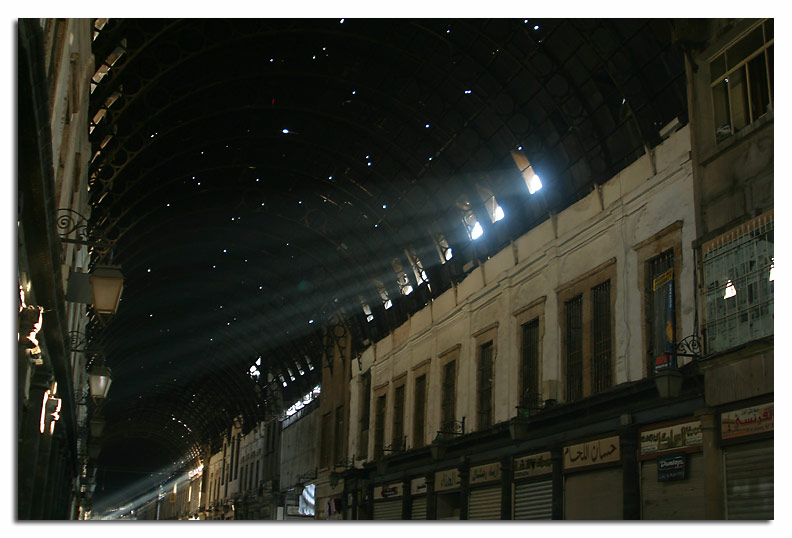
Damascus, Dimashq, Ash-Sham.
The belly button of Syria as all roads converge here. Some would say it is a belly button of civilization since the city has a reasonable claim of being the oldest settlement on the planet. The city has endured both time and multiple empires, over its long history Damascus has been subject to rule by the Arameans, Neo-Babylonians, Persians, Greeks, Romans, Nabateans. After the Muslim conquest Damascus was ruled by the Umayyads, the Abbasids, Hamdanids, Ikhshidids and Fatimids. The Seljuks and Maluks both had their day in the Damascene sun. The Crusaders laid siege but failed to take the city. The Ottomans managed to rule it for 400 years. These are mere empires, though, and as I learned at Apamea, empires can be brief, fleeting things. I imagine the citizen of Damascus, shrugging as one army replaces another and going about his day to day business.
The city has also given its name to certain types of steel and cloth, which tells the long story of conquest and trade much more eloquently than any listing of past conquerors.
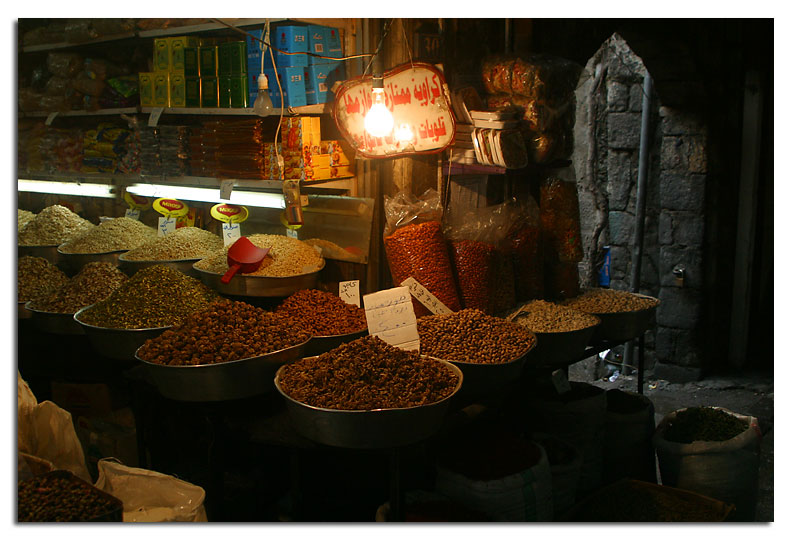
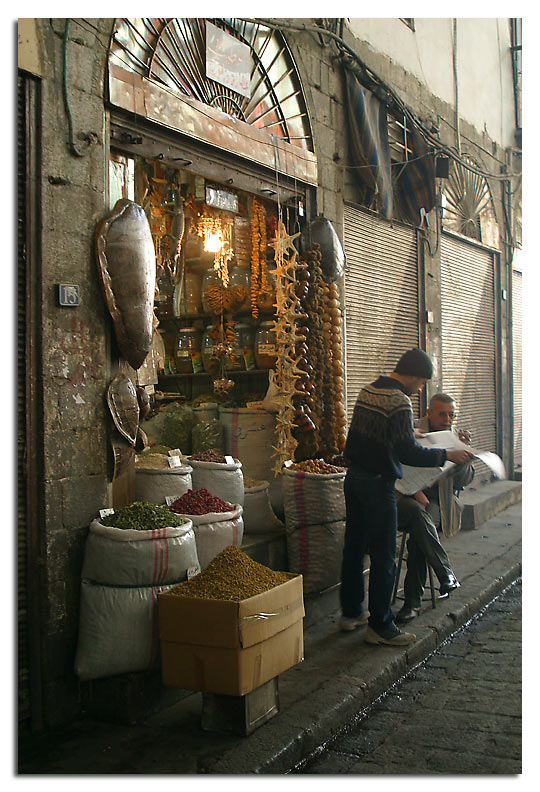
I had just a few days here so I confined myself to the old part of town, the appropriately named Old City. Though there were numerous specific sights to see here, I fell into an increasingly familiar mode of travel: wandering through the Ancient City. Rather than fuddle about with maps and guidebooks, I followed my feet and wandered at random. I may have missed some "must see" sights, but I enjoyed my wanderings immensely. I left my guidebooks and maps stashed away in my backpack and wandered with the company of my smattering knowledge of history and the contexts of past visits to Marrakesh and Fez.
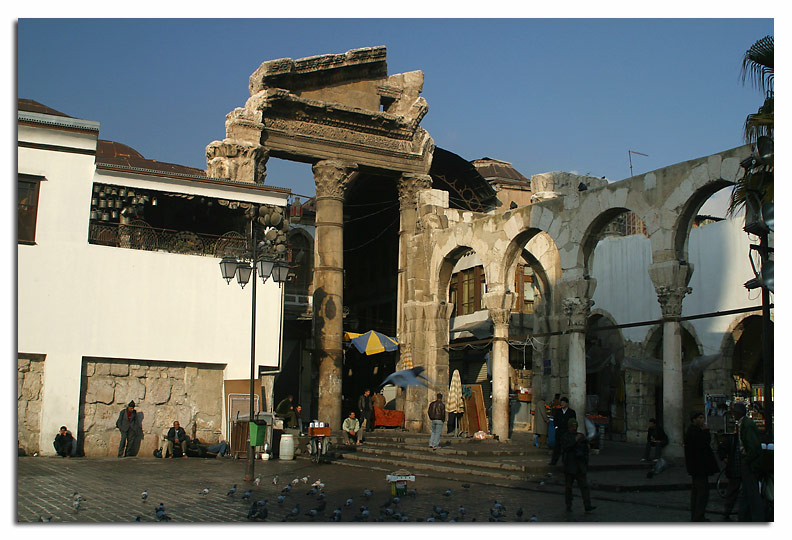
The 3rd century Roman temple gate of Jupiter and the 1860s covered market, all in the shadow of the Ummayad Mosque.
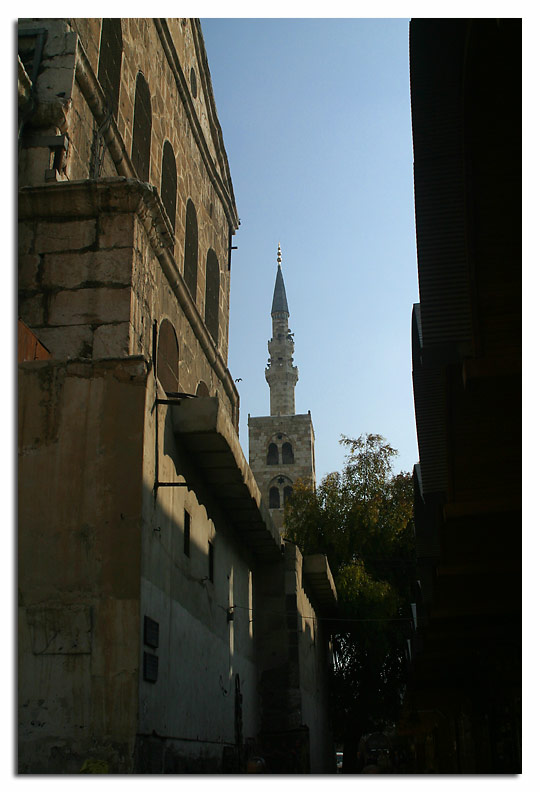
Here's a sight worth noting. This is the Minaret of Jesus. Once armageddon arrives, the prophet Jesus Christ* is scheduled to alight upon this very minaret and lead the final conflict before the day of Judgement.
*Muslims revere Jesus not as a son of God but as a prophet.
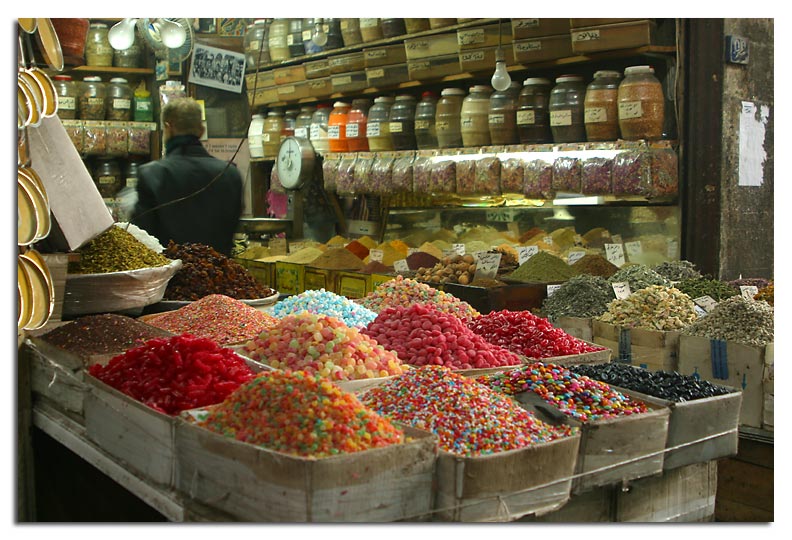
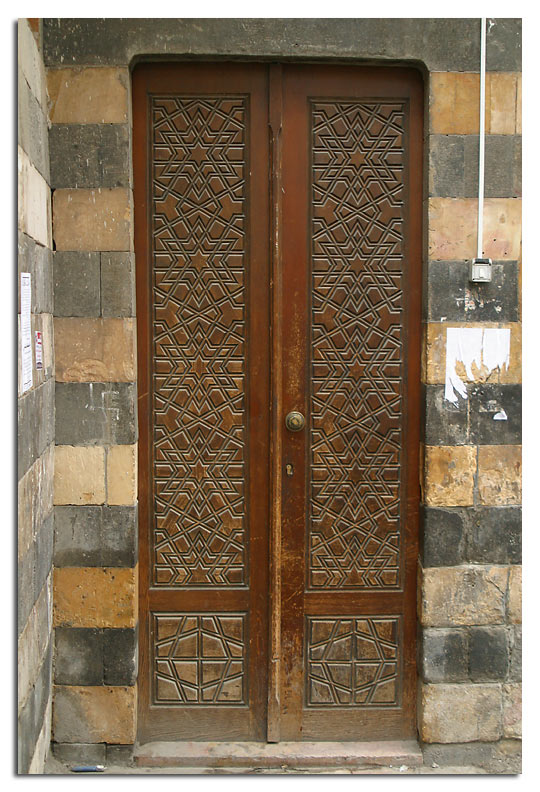
Doorway bordered by the distinctive architectural vernacular of banded black basalt and yellow limestone.


